

Do you know that scene from sci-fi movies where the hero steps into a suit, says one sentence, and suddenly is 10 times stronger? That is exactly what is happening today with software delivery. AI pumps out code, configurations, and changes at a speed where “traditional QA” starts to resemble trying to stop a bullet with a sticky note. And Salesforce teams feel this more strongly than most, because Salesforce is not just “some application.” For many companies, it is simply a revenue engine.
In this article, Craftware experts connect the dots based on hard data:
- Why is Salesforce testing becoming the main bottleneck of deployments today?
- What exactly is UiPath Test Cloud, and who needs it?
- Why is “agentic testing” the right direction for software testing, including for Salesforce?
- How to build a test autopilot for Salesforce that both CIOs and administrators will like?
Salesforce publishes three major releases a year (Spring, Summer, and Winter), which can mess up quite a lot even in the most robust automated tests. And that’s just the beginning, because on top of that, there are changes in the orgs themselves, the teams’ own release trains, and the whole chaos of daily delivery.
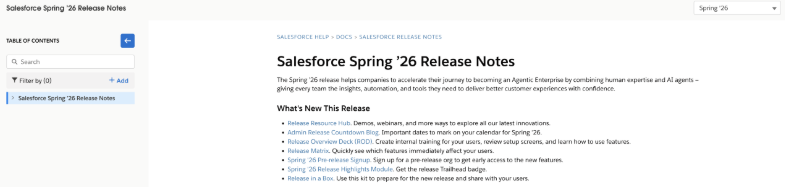
The platform itself imposes a certain level of quality. To deploy Apex code to production, you must meet rigorous requirements regarding tests and code coverage. This is both an advantage and a source of problems.
- A gift, because the platform imposes a minimum validation threshold.
- A trap, because 75% code test coverage does not mean at all that the end-to-end business process actually works.
And yet, in Salesforce, true value doesn’t reside exclusively in Apex classes. It is hidden in:
- flows,
- permissions,
- UI paths,
- integrations,
- data,
- …and all the chaos in between.
Salesforce has been setting a new market standard for years: tests are no longer an isolated stage. They are a strategic control layer for your entire pipeline. That is why Quality Gates, or automated CI/CD checkpoints that ruthlessly block the deployment of code failing to meet quality metrics, have irretrievably ceased to be an optional luxury. They have become the absolute and non-negotiable foundation of every modern value delivery process.
And here it gets really interesting. Because at the same time, a large part of the Salesforce ecosystem still deploys in an uneven, semi-manual, and sometimes painfully archaic way. This leads to one thing: with a growing number of changes and increasingly higher quality requirements, teams need something more powerful than “just another UI testing tool.” And sometimes API.
Let’s call a spade a spade. UiPath Test Cloud is not simply “another framework for writing scripts.” It is a cloud platform positioned as a new generation approach to automation, built around the idea of agentic testing (testing supported by AI agents). Its goal is to radically accelerate and simplify tests throughout the entire software lifecycle.
The concept of agentic testing is based on a very pragmatic division of roles:
AI helps design test scenarios,
AI helps automate them,
AI helps manage them.
But, and this is the most important part – it is still the human who remains at the helm where the risk is highest. We do not hand the keys over to the machine.
This is crucial from the perspective of teams developing Salesforce environments. After all, they operate in ruthless enterprise conditions where there is no room for guesswork. In this world, and particularly in rigorous sectors such as finance, banking, or insurance, the mere phrase “cloud platform” can be an immediate blocker from Security departments. Here, the highest security, compliance with business processes, full auditability, and ironclad stability of mission-critical systems for the entire company are what count.
UiPath Test Cloud takes the tedious work off their shoulders, leaving full control over the final quality.
Test Cloud can therefore be presented as a comprehensive platform that combines:
- UI and API automation (both in an agile low-code approach and traditional coded),
- Distributed test execution allowing for free scaling,
- Seamless integration with CI/CD pipelines (e.g., Jenkins, Azure DevOps),
- Designing, managing, and executing tests from a single, central place,
- Full traceability and advanced support in results analysis.
On top of this comes the crucial governance layer. And a good thing too. Because throwing around slogans like “AI everywhere,” without internal procedures and hard control, is simply a perfect recipe for a corporate cabaret. In no large company today do CIOs and CISOs buy into beautiful presentation visions – they demand hard evidence of the security of their data.
And here comes the UiPath AI Trust Layer “all in white” to save the day.
These are not just paper policies, but a physical architecture that guarantees what is so important today for the enterprise: “Zero data retention or training.” Translating this into business language, none of your customers’ data nor the unique logic of Salesforce processes are, or will be, used to train public LLM models. Zero compromises.
Let’s add the technicalities that ultimately help cut short discussions with the Security department: built-in mechanisms for native masking of sensitive data (PII Masking), precise context embedding to limit hallucinations (Context Grounding), and absolute hardware encryption of the environment – TLS 1.2+ in transit and AES 256 at rest. Only such a layer of trust makes artificial intelligence in testing genuinely ready for deployment in a rigorous enterprise environment.
Many of our clients from finance, logistics, and insurance often ask if UiPath Test Cloud on-premise is possible?
That is why it needs to be clarified right away: UiPath is not just an imposed SaaS service (Automation Cloud).
If your organization’s policy requires it, the platform can operate as a containerized Automation Suite architecture, run in your own public cloud (using Kubernetes clusters such as OpenShift, EKS from AWS, or AKS from Azure), and even in environments completely isolated from the external network.
If you are preparing for a discussion with Security, CTO, CIO, or CFO, you must have hard arguments in hand that definitively end debates about the security of integration with Salesforce. The UiPath infrastructure boasts rigorous certifications: SOC 2 Type 2, FedRAMP Moderate, HIPAA, HITRUST, and ISO 27001 and 27018 standards.
This is exactly how the highest security, strict compliance with business processes, and full auditability are built.
Agile teams don’t need another beautiful presentation about the future of IT. They need a tool that turns released changes into certainty. Continuously. And without unnecessary melodrama. And this is the moment when UiPath Test Cloud in the context of Salesforce starts to make deep sense.
Creating and maintaining tests (or the end of crying over locators)
The biggest pain point of test automation rarely involves the actual “writing of the test.”
The real nightmare begins later.
Maintenance.
Updates.
Constant UI changes.
The fragility of code based on unstable locators. Let’s say it out loud: whoever has ever automated Salesforce (warm regards to Salesforce Classic veterans) will never laugh in the circus again.
How is UiPath’s Test Cloud supposed to help us in this context? Let’s forget the slogan “AI magic” for a moment. Let’s look deeper at what the Autopilot mechanism means in hard, technical engineering language. The tool takes on the dirtiest work, dividing it into three main pillars:
- Test Design.
A huge gamechanger in terms of speeding up the testing team’s work. Why?
Because it’s not just mindless “test generation” based on requirements, which many tools can do. Before Autopilot creates anything, it can evaluate the quality and testability of the business requirements themselves. Only then does it transform manual specifications, descriptions from ALM systems, or even “flat” Excel files into ready-made test scenarios. And the point here is not to completely replace the manual tester. The point is to automate their repetitive and less creative work so that the manual tester has more time to check edge cases.
- Test Automation.
The commonly known self-healing we have written in Playwright or other tools expanded with LLM models is often too little in Salesforce conditions. The automating agent in UiPath goes a step further: it applies fuzzy verification algorithms, has the built-in ability to automatically refactor outdated code, and for test automation engineers (often called SDETs), it can generate object-oriented script code in C# (Coded test automation). Of course, we won’t try to forcefully convince you here that some magic happens or that it’s all bug-free. That is not the case. But at the end of the day, it significantly speeds up the work of an automation tester.
- Test Management (Management and analytics of executed tests).
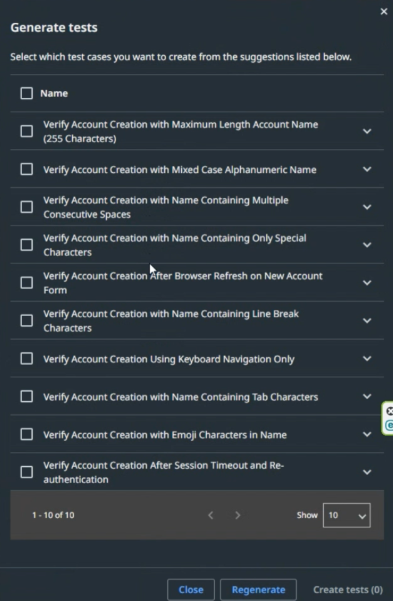
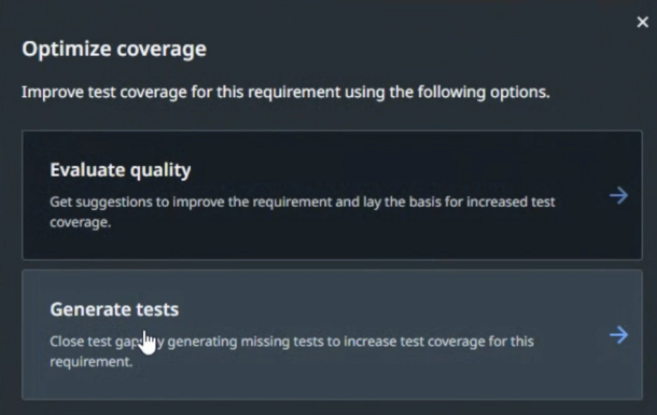
No more manually digging through reports and logs after a failed nightly regression. UiPath Test Cloud offers an AI-based feature called Generate test insights, which instantly analyzes results and generates structured reports. This allows you to understand the actual cause of regression test failures in a few minutes, separating environmental errors (and these simply happen) from actual application defects. It might seem like a small thing for highly experienced testing teams or automation testers, but the prospect of getting a quick answer across a scale of several hundred or thousand tests can save many hours of tedious work.
This is absolutely crucial in the Salesforce ecosystem, where a seemingly innocent configuration change, a new layout, a modification to Lightning components, or a reshuffle in business flows can shatter any rigidly written automation in a fraction of a second.
Your Own AI Agents in UiPath Test Cloud (BYOM)
In my opinion, this is one of the most interesting features of this tool. In the market, the vast majority of AI-based software testing tools have one gigantic flaw: they are a hermetic, tightly sealed “black box.” We get an out-of-the-box solution that operates solely according to the manufacturer’s logic, and it is the automation creator who has to adapt to it. In the complex Salesforce environment, where so many organizations have their unique data models, this is simply unacceptable in the long run.
In UiPath Test Cloud, however, the solution is architectural, because it allows you to build your own dedicated AI agents. Let’s bring this down to a more descriptive image – let’s think of it as building blocks for test architects. Do you need to feed the environment with a massive batch of specific test data? Your team can build a specialized “Data Retriever Agent” that, using natural language queries, efficiently extracts and prepares the required entities, bypassing slow UI clicking.
The most important thing is that we are not limited exclusively to one LLM provider here.
You can connect the created agent to the exact model that meets your company’s corporate security requirements, regardless of whether you prefer to use Anthropic Claude, GPT, Gemini, Azure OpenAI, or run your own dedicated model hosted on AWS SageMaker. This is a fundamental change. Agentic testing ceases to be a trendy marketing slogan and becomes a powerful, open architectural platform in the hands of technical people.
Salesforce test automation: UI and API in one model of thinking
In Salesforce, the truth about a business process rarely resides in just one place. It most often encompasses simultaneously:
- UI -> Lightning, flows, role-dependent access, screen behavior,
- API -> integrations, services, validations,
- Data state -> records, sharing, profiles, permission sets.
UiPath Test Cloud is precisely the platform that grasps this landscape holistically, not just sporadically. This is crucial, because the business doesn’t ask if validation failed on the API, or if a UI component crashed. The business asks briefly: does the process work?
This is exactly the thin line between the “automation of dreams” and the “graveyard of test code.”
UiPath Test Cloud delivers self-healing features here, which by design are meant to automatically fix tests breaking down due to unstable selectors, timing, or minor UI changes. For teams testing Salesforce, this is not just a “nice addition.” It’s a very concrete advantage.
After all, Lightning has its almost legendary sources of flakiness (test instability):
- dynamic loading of components,
- unpredictable re-rendering,
- dynamically generated selectors,
- shadowDOM,
- embedding in iFrames,
- delays resulting from data and the current state of the environment.
Traditional tools (e.g., Selenium) based on XPath or CSSWebDriver paths can automate Lightning, but the cost of stabilization can be high with dynamic attributes and rendering, which is why it’s worth using methods/attributes more resistant to change.
Test Cloud breaks these boundaries thanks to native integration and dedicated metadata attributes (e.g., sfl-path), which flawlessly target the component regardless of the HTML code being rebuilt in a new release.
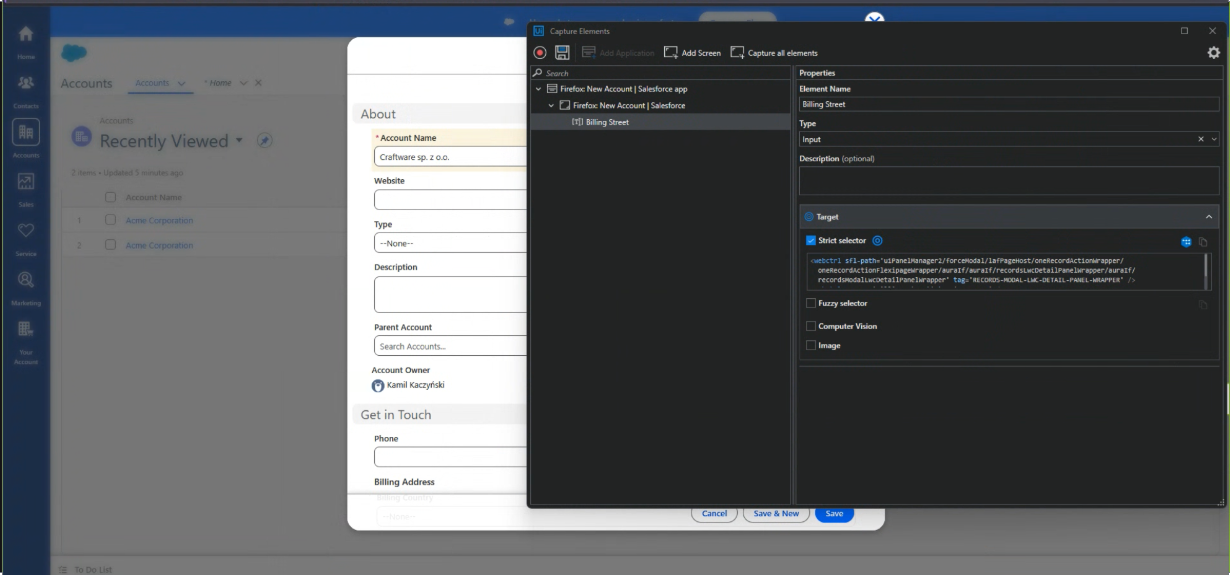
Additionally, the Healing Agent engine uses Fuzzy Verification and multiple visual anchors (Multi-Anchor Unified Targeting) to try and fix broken selectors in real-time while the test is running, saving the automated test from an unnecessary interruption.
If a tool authentically helps contain this chaos, it ceases to be just “another automation combine.” It begins to be a platform of stability.
Fit for the delivery ecosystem
Salesforce is increasingly clearly shifting testing to the middle of the pipeline. Not to the side. Not to the very end. Right in the middle. UiPath Test Cloud fits perfectly into this logic, as it has been positioned from the beginning as a solution integrated with CI/CD and ready to work as hard Quality Gates.
This means one thing: tests do not end their lives as a sad report or a green-red dashboard that someone will look at after the fact. They become a real mechanism for steering the flow of changes. Lead Time, Change Failure Rate (CFR), or Defect Leakage are the absolute basics for letting code further into production.
And that is exactly what this is all about.
It’s a decision about the throughput of the entire business.
It’s time for a version for the CFO, CIO, and anyone who prefers hard numbers in Excel over beautiful slogans.
Let’s say it out loud: software testing cannot exclusively be a cost center.
It is the main risk management mechanism. In other words, it is the throughput regulator of your revenue engine.
In the Salesforce ecosystem, this can be seen plain as day. Data doesn’t lie – a massive chunk of teams’ time evaporates during the deployments themselves. What does this stem from? Mainly from quality problems, slow-running tests, or simply incomplete validation. Therefore, the true business case does not sound like: “Let’s automate because it’s modern.”
Let’s be intellectually honest with each other: these are conclusions drawn from broad testing programs based on UiPath, and not a magic guarantee of success for absolutely every Salesforce org right off the bat. But the strategic conclusion remains ruthless: since Salesforce is turning automated Quality Gates into a new market standard, the organizations that will win are those that can test continuously and scalably, without artificially inflating their headcount.
We descend from the clouds of “visions of the future” to a hard operational level. The real question is no longer: “Does agentic testing sound cool in a presentation?”, but “How to turn this into an effective delivery mechanism?”
We start with a business benefit analysis, not tool selection.
We start with the absolute basics. Before we write the first line of automation at Craftware, we check:
- deployment time between environments (and how many there even are),
- the frequency of releasing packages to production,
- the lead time for individual changes,
- the number of defects (bugs) that escape into production anyway,
- the percentage of team time brutally consumed by the deployments themselves.
Without this hard initial data, any automation deployment instantly turns into classic enterprise cosplay: a lot of beautiful slides, zero evidence of delivered value.
We build a minimal, but concrete regression suite.
Not everything at once. The slogan “let’s automate the whole org right away” is the shortest path to a project disaster. First, we build a Minimum Viable Regression Suite around absolutely critical business paths. Where do we get them from? If it’s a production deployment that we are still developing, observability tools come to the rescue (Salesforce Event Monitoring combined with UiPath Process Mining can work wonders here). Often, however, we simply have to extract this knowledge from the team and the users themselves.
With a new implementation, it’s simpler because we know the priorities. We test what really hurts the business when it stops working:
- Lead-to-cash,
- Case resolution,
- Quoting & onboarding,
- Entitlement flows,
- Key integrations.
These are the paths whose failure is immediately noticed by the board.
We look for places where testing with AI can actually make sense
AI doesn’t have to “manage the entire QA” right away. That would be beautiful, but the IT world is too complex for that. The biggest return on investment appears where artificial intelligence limits the most costly, repetitive drudgery:
- generating and updating test cases,
- efficient creation of test data,
- fuzzy verification,
- preliminary analysis of results.
We plug Salesforce tests into the pipeline as a gate, not a report
This is a critical point. The goal of implementing UiPath Test Cloud is not “pretty dashboards.” The goal is tests that can stop a weak change and clearly justify why they are doing so.
If your tests do not directly influence the deployment decision, you do not have automation. You just have a very expensive hobby.
In the target model, automated Salesforce tests must work as an integral part of the pipeline, before deploying changes, with clear pass/fail logic, traceability, and results that are readable for the business. It is necessary to adjust the regression strategy to deployment windows (e.g., utilizing Sandbox Preview 4-6 weeks before a new seasonal Salesforce release) and strictly monitor environment refresh limits (where Full Sandbox copies can only be refreshed every 29 days).
Finally, we connect testing with planning and release management
One of the classic implementation failures, repeatedly confirmed by our clients coming to us for help, looks like this:
– But we already have great automation!
– Of course, we understand. And what does it actually change in your company/your project?
– Well… all in all, not much.
Why does this happen? Because tests physically exist, but they live in a vacuum. They are not connected in any way to business requirements, defects, planning, and release decisions.
That is why a two-way flow of information is so crucial – and here there is no room for sculpting your own scripts and integrations.
UiPath solves this problem architecturally through a dedicated Test Manager Connect bus.
It provides native, instantaneous synchronization of requirements, runs, and bugs with the most popular ALM (Application Lifecycle Management) systems. We are talking about ready-made integration of the test environment directly with applications such as Jira, Xray, ServiceNow, Azure DevOps, or SAP Solution Manager.
Thanks to this, a detected test failure in UiPath Test Cloud automatically raises a bug status in Jira, mapping it directly to a specific business requirement (User Story); automation stops being just a technical curiosity and becomes a real business lever and a hard argument for the Release Manager.
It all comes down to one, most important rule:
Quality Gates + Agentic Automation + Governance === Safe speed in Salesforce
And that’s what this whole puzzle is about.
Not just automation for automation’s sake.
Not about testing with AI for PR.
Not about technological “modernity”.
It’s about enabling Salesforce development teams to deliver changes faster, but without turning every release into a gamble. And this is exactly the moment when automated tests stop being “another testing tool” and start being what they were meant to be from the beginning: a reliable layer of trust for fast Salesforce delivery.
Autor Robert Kazuła

My journey from Automation Engineer to Head of Sales & Innovation has taught me one thing: technology only makes sense when it is backed by hard business results.
Today, instead of sales promises, I offer Clients concrete engineering solutions, backed by experience in managing 70-person teams, building strategic partnerships, and implementing automation combined with AI.
I build relationships where innovation is not an empty buzzword on slides, but a well-calculated investment.
